
By Caleb Lopez
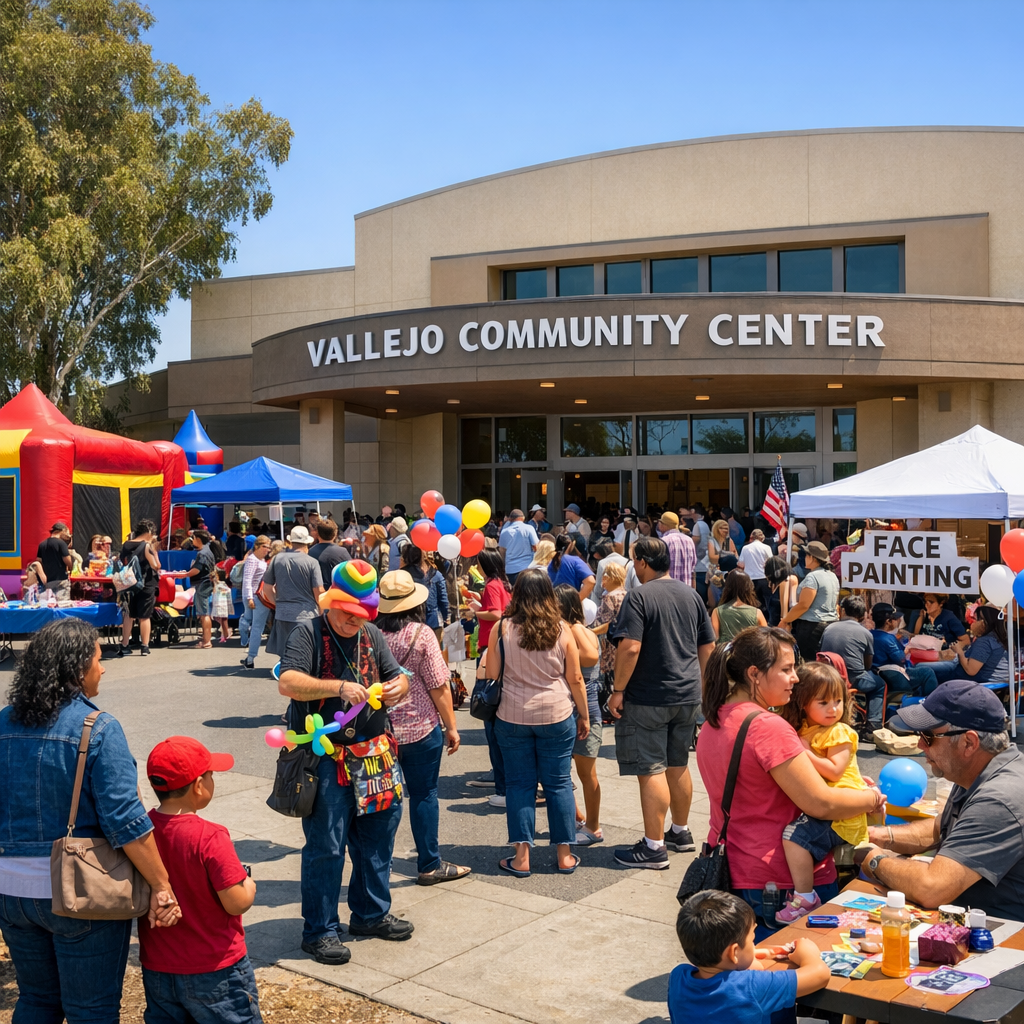
When I walk into the Vallejo Community Center on Amador Street, or the Rise Vallejo Early Education Campus on Coronel Avenue, I see more than walls and rooms. I see neighbors connecting. I see families breathing easier. I see a city choosing to come together.
The Role of Community Spaces in Vallejo
Vallejo’s community centers—managed by the Greater Vallejo Recreation District (GVRD) and by nonprofit partners—play many roles: they host children at play, provide classrooms, and serve as gathering spaces for celebrations, public meetings, or just to share a meal. The Vallejo Community Center has been the setting for social events for over fifty years. Its large auditorium, full kitchens, banquet rooms—these are tools that allow people to come together. 1
Rise Vallejo, which opened earlier this year, transforms what used to be a shuttered elementary school into a vibrant campus with 15 classrooms, age-appropriate playgrounds, and increased childcare capacity. The center is a concrete response to a critical need—not just for early learning—but also for supporting working families and local care providers. 2
Why These Spaces Matter
Early Learning and Future Opportunities
Programs for young children aren’t just “cute educational stuff.” Access to early childhood education can be decisive in determining school readiness, in shaping developmental growth, and in leveling the playing field for kids born in different ZIP codes. Vallejo’s investment in a place like Rise focuses not just on classrooms, but on opening doors for families to work, study, and thrive. 2
Strengthening Community Bonds
Meeting friends at “Storytime in the Park,” watching local art shows at gathering halls, or holding birthday parties and civic discussions—these moments build connections. They remind us where we live is more than geography. Public facilities like the North Vallejo Community Center, or the Filipino Community Center near Amador, are anchors in neighborhoods. They help us share culture, traditions, and voice. 3 4
Challenges and Opportunities Ahead
No space like this is without struggle. Funding pressures, maintenance needs, and shifting demographics all demand ongoing attention. Vallejo’s General Plan calls for ensuring our recreation facilities are safe, accessible, and responsive to people of all ages and backgrounds. 5
We have opportunities to lean into that promise. That means involving families in how spaces are used, finding creative funding through partnerships and grants, and making sure centers are well distributed so each neighborhood feels served.
What Residents Can Do
- Attend community center meetings and share your ideas about programming: seniors, parents, youth—they all have insight.
- Volunteer—every center depends on people to run classes, host events, clean up, teach, or simply welcome new faces.
- Support bond or grant measures that invest in early learning and facility upgrades.
- Lift up what works—for example, sharing stories of how a center made things better encourages others to invest or get involved.
In Vallejo we have many challenges—rising cost of living, care for young children, aging facilities, and more. But in each center we also have possibility: spaces where cultures converge, where needs are met, where people reclaim their time and their hope. And that counts for something.
Our community centers are ours because we make them so. Let’s keep making them strong.